
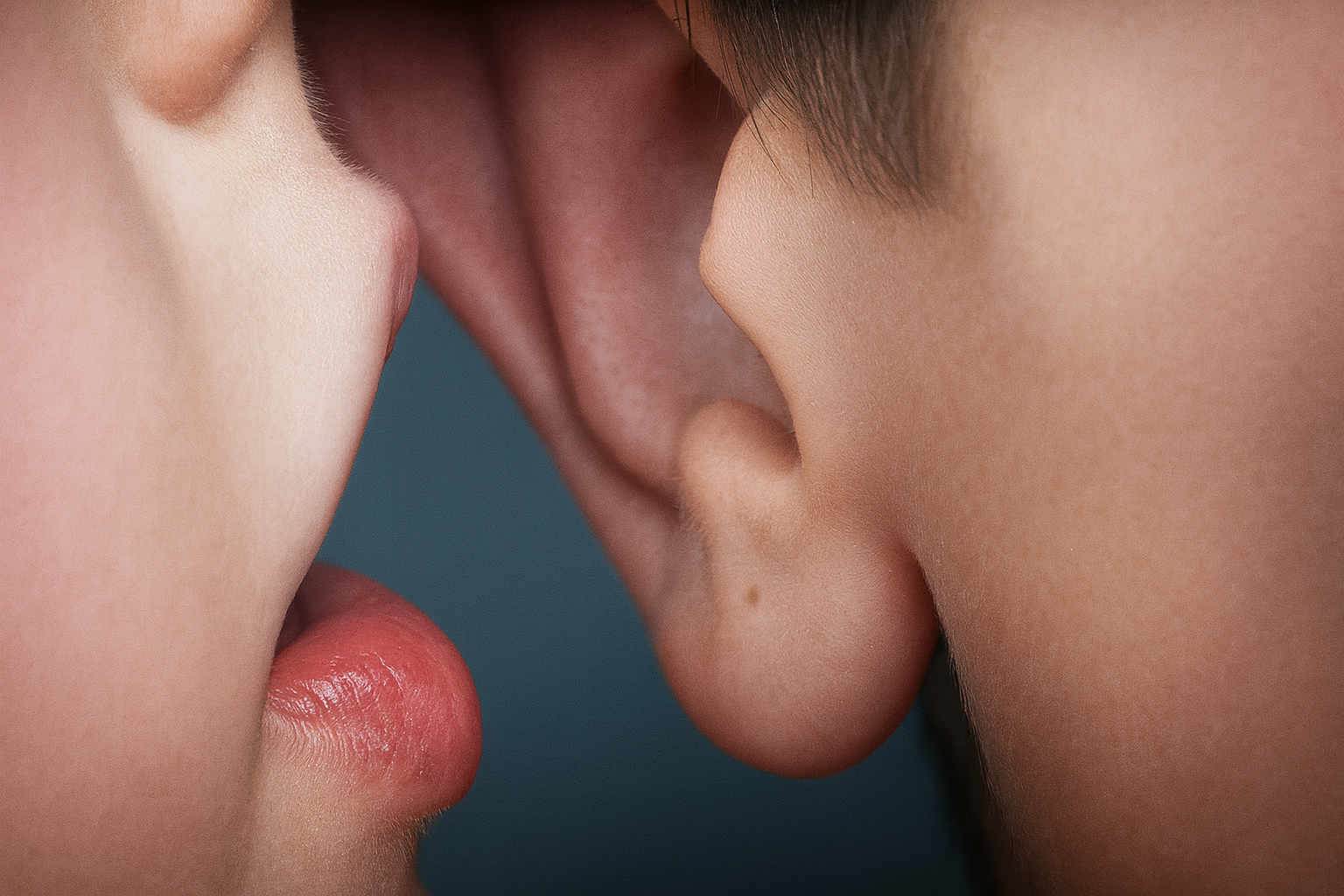
Your Brain Isn’t “Wasting Time” — It’s Trying to Heal
The next time you catch yourself lost in a loop of:
- Soap-cutting
- Sand-slicing
- Deep-cleaning
- Paint swirling
- Whisper or tapping ASMR
…pause and ask:
“What is my brain trying to get away from right now?”
“What kind of comfort am I needing?”
Because these videos are rarely “just entertainment.”
They’re:
- A form of self-soothing
- A way to reduce anxiety and stress
- An easy, accessible tool for emotional regulation
- A window into your personality, sensitivity, and mental state
If you’re overwhelmed, burned out, or emotionally tired, your brain may be pulling you toward calm, predictable, satisfying sensory input as a way to reset.
That doesn’t mean you should ignore real-life problems or replace therapy and healthy coping with endless scrolling.
But it does mean you can stop calling yourself “lazy” for needing these moments.
Sometimes, your brain’s response to these videos is simply this:
“I’m not okay. I need something gentle. I need a break.”
And that alone tells you more about your inner world than you might have ever realized.
References
Poerio, G. L., Blakey, E., Hostler, T. J., & Veltri, T. (2018).
More than a feeling: Autonomous Sensory Meridian Response (ASMR) is characterized by reliable changes in affect and physiology.
PLOS ONE. This study found that ASMR videos reduce heart rate and increase pleasant feelings, supporting the idea that ASMR has real calming and physiological effects. PLOS+1
McErlean, A. B. J., & Banissy, M. J. (2017).
Assessing individual variation in personality and empathy traits in self-reported Autonomous Sensory Meridian Response (ASMR).
Multisensory Research. This research showed that people who experience ASMR tend to score higher on empathy and openness to experience, linking ASMR to specific personality traits. PubMed+1
Fredborg, B. K., Clark, J. M., & Smith, S. D. (2017).
An examination of personality traits associated with Autonomous Sensory Meridian Response (ASMR).
Frontiers in Psychology. This paper found that ASMR responders differ from non-responders on several Big Five personality dimensions, supporting the idea that ASMR sensitivity is tied to personality. Frontiers
Smith, S. D., et al. (2017).
An examination of the default mode network in individuals with Autonomous Sensory Meridian Response (ASMR).
Social Neuroscience. Using fMRI, this study showed that people with ASMR have different connectivity in their default mode network, suggesting a distinct neural profile. tandfonline.com+1
Lee, S., et al. (2020).
Effects of Autonomous Sensory Meridian Response on functional connectivity and affective state.
Frontiers in Behavioral Neuroscience. This study examined how ASMR videos change brain connectivity and emotional state, reinforcing the link between ASMR, relaxation, and brain networks. Frontiers
Lohaus, T., et al. (2023).
The effects of Autonomous Sensory Meridian Response (ASMR) on attention and physiological arousal.
Experimental Brain Research. This research confirmed that ASMR can both relax and physiologically activate viewers, indicating a complex but real brain-body response. PLOS+1
Vanhersecke, Z. (2021).
‘Oddly satisfying’? Or WEIRD satisfaction…
Psychology LSE Blog. A psychological exploration of why “oddly satisfying videos” are so compelling, touching on completion, control, and sensory pleasure. blogs.lse.ac.uk
Nansen, B. (2022).
Visual tactility: “Oddly satisfying” videos, sensory genres and ambiguities in children’s YouTube.
Convergence: The International Journal of Research into New Media Technologies. This article discusses “oddly satisfying” videos as a sensory media genre and why they’re appealing, especially to younger audiences. journals.sagepub.com
Scharping, N. (2017).
Why Are Oddly Satisfying Videos So… Satisfying?
Discover Magazine. A popular science article exploring the psychological appeal of satisfying videos and our brain’s “just right” response.
This is very informative.