
The Hidden Science of Influence
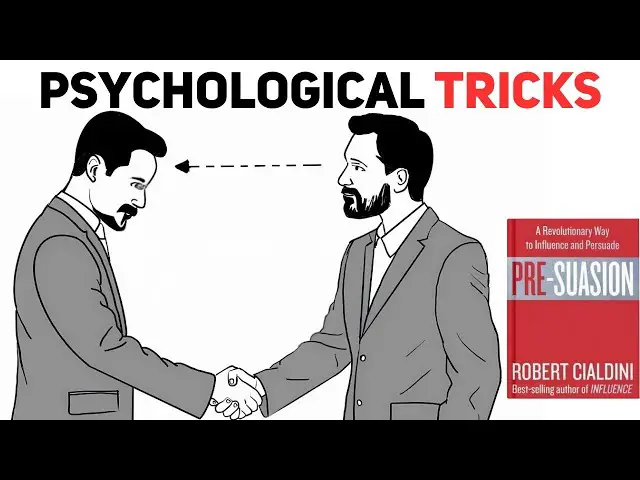
“Honestly, the more books I read on psychology, the more I get scared,” begins one of the most eye-opening summaries of Robert Cialdini’s Pre-Suasion. Why? Because the book reveals a startling truth: persuasion doesn’t begin with the message. It begins before the message is even delivered.
This is the science of pre-suasion — the ability to shape people’s decisions by priming their minds in advance. The scary part? Most of these psychological tricks work on a subconscious level. You think you’re making a free, rational choice. In reality, your brain was nudged long before you said “yes.”
These aren’t harmless party tricks. They are techniques so powerful that many argue they should be illegal. In this article, based on Pre-Suasion and verified psychological experiments, we’ll uncover six manipulation tactics you encounter every day — in advertising, politics, sales, and even personal relationships.
By the end, you’ll not only recognize these tactics but also learn how to protect yourself. And if you want to go deeper, I’ll show you how to get a free copy of Robert Cialdini’s book Pre-Suasion at the end of this article.
1. Priming: The Magic Pill of the Subconscious
“They feel like they are in control and made a conscious decision — but they are not.”
Priming happens when exposure to certain words, images, or objects subtly shifts your mindset and influences your behavior.
Case Study 1: Flowers and Romance
In a French experiment, women were approached in shopping malls by an attractive man asking for their number. Normally, rejection rates were high. But when the man stood in front of a flower shop, success rates doubled. The flowers acted as a romantic prime, making women unconsciously more receptive.
Case Study 2: The Guitar Effect
In another experiment, a man carrying a guitar case received far more positive responses when asking women out compared to when he carried nothing. Just holding the symbol of music and creativity changed perceptions.
Why It Matters
Priming works because our subconscious links certain cues with emotions or traits. Advertisers know this — that’s why luxury brands show yachts, sunsets, and champagne instead of product specs.
High-value keywords: priming psychology, subconscious influence, manipulation tactics
2. Visual Cues: Clouds vs. Coins
Imagine shopping online for a sofa. If the background shows clouds, you’ll likely focus on comfort. If the background shows coins, you’ll prioritize price.
This was proven in a controlled experiment at an online furniture store. Buyers swore the backgrounds had no impact on their decisions — yet the data proved otherwise.
Why It Matters
Visual cues shape what we think is “important” at the moment. Supermarkets use warm lighting in produce sections to make fruits look fresher. E-commerce sites highlight “bestsellers” to direct your attention to higher-margin items.
High-value keywords: consumer psychology, visual marketing tricks, subconscious sales
3. Anchoring: The Million-Dollar Joke
A salesman couldn’t sell his $75,000 product. Prospects kept trying to negotiate, and most deals fell through. Then he tried something new:
Before revealing the price, he joked: “Of course, I can’t charge you a million dollars for this.”
Suddenly, $75,000 felt like a bargain compared to a million. Almost no one negotiated anymore.
The Science Behind It
This is called the anchoring effect. Our brains rely on the first number we hear as a reference point, even if it’s irrelevant. That’s why “Was $299, now $99” feels irresistible, even if $99 is the fair price.
Real-World Example
- Real estate agents show high-priced “decoy” homes first, making the actual listing seem more affordable.
- Car dealers present premium packages before standard ones, making the cheaper option feel like a steal.
High-value keywords: anchoring psychology, pricing strategy, persuasion sales tactics
4. Identity Shaping: “Are You Adventurous?”
Sometimes all it takes is one question to reframe your identity.
In a study, researchers asked people if they considered themselves adventurous. Most said yes. Immediately after, they offered a new energy drink to try. Since adventurous people “say yes to new experiences,” compliance shot up.
Why It Matters
This tactic works because people want to stay consistent with their self-image. If you see yourself as generous, you’re more likely to donate. If you see yourself as smart, you’re more likely to buy educational products.
Practical Example
- Nonprofits ask: “Do you consider yourself a caring person?” before requesting donations.
- Job recruiters ask: “Would you describe yourself as ambitious?” before pitching challenging roles.
High-value keywords: identity-based marketing, psychological triggers, persuasion techniques
5. Unity: The Strongest Persuasion Principle
Robert Cialdini highlights unity as one of the most overlooked but powerful principles of influence.
When someone makes you feel like “we’re on the same team,” your defenses drop.
Real-World Examples
- A banker told a client: “I’d recommend this product even to my own mother.” Instantly, trust levels rose.
- Warren Buffett reassured shareholders by saying he advises them the same way he would advise his family.
- In Cialdini’s class, parent survey responses jumped from 20% to 97% simply because students gained one bonus point if their parents filled it out.
Why It Matters
The family bond is the strongest form of unity. But even subtle connections — same school, same city, same background — can dramatically increase persuasion power.
High-value keywords: unity principle, emotional persuasion, trust in marketing
6. Environmental Influence: Preparing the Soil
Cialdini uses a farming analogy: the message is the seed, but persuasion depends on the soil.
In Belgium, researchers tested toddlers with background images:
- A single person = only 20% helped pick up dropped items.
- Two people together = 60% helped.
Even 18-month-old children, who couldn’t reason logically, were influenced by subtle environmental cues.
Why It Matters
Your environment can prime you for productivity, kindness, or competitiveness. That’s why successful people curate their workspaces with motivational cues, goal reminders, and the right music.
High-value keywords: environmental psychology, subconscious influence, pre-suasion techniques
Practical Tips: Applying Pre-Suasion Ethically
From the transcript and Cialdini’s book, here are six ways to use these insights responsibly:
- Leverage family ties: Offer bonuses for family members, not just individuals.
- Ask for advice, not feedback: “Advice” fosters unity, while “feedback” creates distance.
- Time your requests: Ask after achievements, when positivity is high.
- Emphasize shared identity: Highlight common ground before asking for support.
- Prime your environment: Use words, images, and music that align with your goals.
- Set the right mindset first: Remind people of positive past behavior before asking for change.
Conclusion: Why Awareness is Your Shield
From flowers and guitars to clouds and coins, these studies prove one thing: we are all more influenceable than we think. These tricks are fascinating but also dangerous. Used ethically, they can build stronger businesses and relationships. Used unethically, they can manipulate entire populations.
That’s why many argue these psychological tricks are so powerful they should be illegal.
But knowledge is power. By spotting these tactics, you take back control of your choices.
Free Bonus: Get Robert Cialdini’s Pre-Suasion
If you found these examples mind-blowing, just wait until you dive into Robert Cialdini’s Pre-Suasion. This book reveals dozens more tactics and real-life experiments that show exactly how influence works before the message.
👉 As a special bonus, I’m offering you a free copy of Pre-Suasion.